
Verminder mentale ruis en zelfpraat
Jij bent niet je gedachten, jij bent het bewustzijn dat ze observeert, en dat onderscheid verandert alles.
Lees meer…
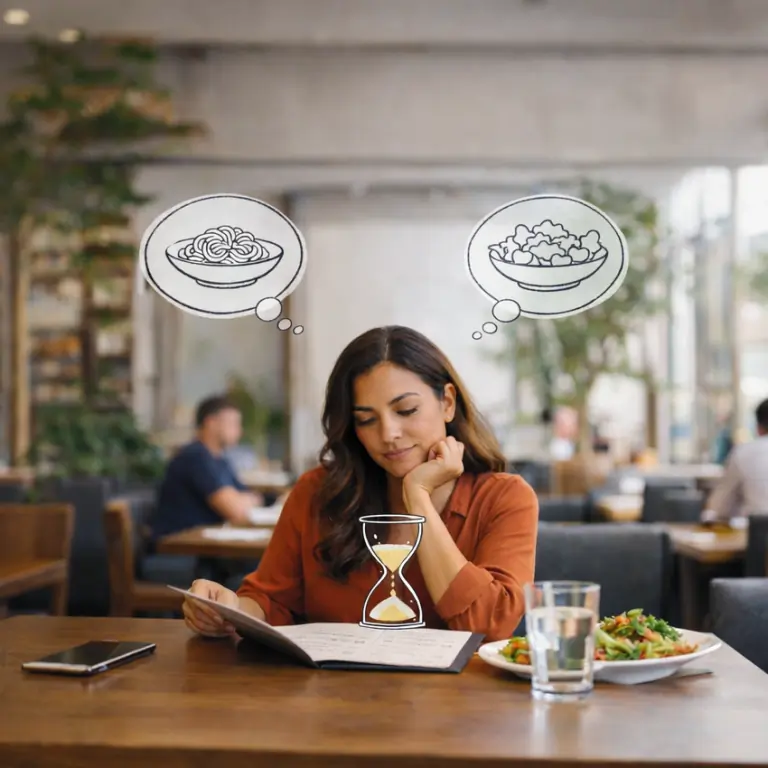
Je staart al vier minuten naar de menukaart. Je vriend heeft allang besteld. De ober wacht. Je zit te rekenen aan spijt, tevredenheid en de vraag of de pasta die extra calorieën waard is vergeleken met de salade waar je eigenlijk helemaal geen zin in hebt. Tegen de tijd dat je eindelijk kiest, heb je meer mentale energie aan je lunch besteed dan de meeste mensen aan hun maandelijkse budget.
Beslissingsverlamming heeft een prijskaartje. Elke minuut die je kwijt bent aan het afwegen van onbelangrijke keuzes, is een minuut die je niet besteedt aan beslissingen die je leven echt vooruit helpen. De mentale vermoeidheid stapelt zich op. Tegen de avond ben je te uitgeput om helder na te denken over het jobaanbod, het gesprek over je relatie of de zakelijke koerswijziging die er echt toe doet. Je cognitieve energie is niet oneindig, en jij hebt die net opgemaakt aan vis versus kip.
Het probleem is niet dat je besluiteloos bent. Het probleem is dat je elke beslissing als even belangrijk behandelt. Je brein maakt van nature geen onderscheid tussen keuzes die ertoe doen en keuzes die dat niet doen, dus zet het overal maximale rekenkracht op in. Dat is niet grondig, dat is inefficiënt.
In NLP noemen we dit chunk-sizing. Je neemt een klein stukje werkelijkheid en blaast het op tot de omvang van een groot stuk, om je vervolgens af te vragen waarom het zo zwaar voelt. De oplossing is leren om de ware omvang van wat je beslist goed in te schatten.
Hier is de test. Stel je beide uitkomsten voor over zes maanden. Je koos de pasta. Je koos de salade. Je nam de baan aan. Je nam de baan niet aan. Je verhuisde naar Austin. Je bleef in Boston. Vraag jezelf nu eerlijk: welke versie van jou is over zes maanden wezenlijk anders vanwege deze keuze?
Bij de lunchkeuze is geen van beide versies anders. Over zes maanden weet je niet meer wat je vandaag hebt gegeten. Daaraan merk je dat je het overdenkt. De future pace-techniek haalt het kunstmatige gewicht weg dat je hebt toegevoegd aan keuzes die dat gewicht niet hebben. Als beide tijdlijnen vrijwel identiek zijn, verdient de beslissing niet meer dan dertig seconden van je aandacht.
Sommige beslissingen leiden wél tot verschillende toekomsten. De baan aannemen of niet aannemen levert twee echt verschillende scenario's op over zes maanden. Naar een andere stad verhuizen geeft een ander leven dan blijven waar je bent. Zulke beslissingen verdienen tijd, onderzoek en zorgvuldig nadenken. Maar ook dan heb je een grens nodig. De meeste complexe beslissingen worden niet beter van analyse voorbij een bepaald punt. Dan krijg je afnemend rendement: meer nadenken betekent alleen meer spanning, zonder meer helderheid.
De hiërarchie voor beslissen is simpel. Duurt de impact korter dan vijf minuten, beslis dan in dertig seconden of minder. Kies de eerste optie die aan je minimale criteria voldoet en ga verder. Duurt de impact korter dan een dag, geef het dan maximaal vijf minuten. Duurt het een week, vijftien minuten. Heeft het echt invloed op de komende zes maanden van je leven, neem dan een uur. Alles daarbovenop levert snel afnemend rendement op.
Dit gaat niet over roekeloosheid. Het gaat over proportioneel zijn. Als je vier minuten besteedt aan een lunchbestelling, ben je niet zorgvuldig, maar verspillend. Je vermogen om te beslissen is een bron die uitgeput raakt door gebruik en aansterkt door rust. Als je het besteedt aan dingen die er niet toe doen, heb je het niet meer als je het nodig hebt.
Het meeste overdenken komt voort uit de wens om onzekerheid weg te nemen. Je wilt een garantie dat je de juiste keuze maakt. Die garantie bestaat niet, niet bij kleine beslissingen en niet bij grote. Wat wel bestaat, is de mogelijkheid om een keuze te maken, feedback te krijgen en bij te sturen. Die lus is sneller en betrouwbaarder dan welke analyse vooraf dan ook.
Probeer dit de komende drie dagen. Doe vóór elke beslissing de future pace. Zie beide uitkomsten over zes maanden voor je. Als ze er hetzelfde uitzien, heb je dertig seconden om te kiezen. Als ze verschillen, bepaal dan hoe groot dat verschil werkelijk is en geef je beslissing daar de tijd op af. Houd bij hoeveel tijd je bespaart en hoeveel van je snelle beslissingen je daadwerkelijk spijten.
De meeste mensen ontdekken dat hun snelle beslissingen net zo goed zijn als hun urenlang afgewogen beslissingen, soms zelfs beter. Als je niet verlamd wordt door overdenken, vertrouw je meer op je intuïtie. Dat onderbuikgevoel is patroonherkenning op basis van duizenden eerdere ervaringen. Het is sneller dan bewuste analyse en vaak nauwkeuriger bij beslissingen waarvoor geen gedetailleerde berekening nodig is.
Het doel is niet om op te houden met denken. Het doel is om te denken in verhouding tot wat de beslissing werkelijk verdient. Bewaar je mentale budget voor keuzes die verschillende toekomsten creëren. Al het andere beslis je snel en vergeet je nog sneller.
Jij bent niet je gedachten, jij bent het bewustzijn dat ze observeert, en dat onderscheid verandert alles.

Zie verandering als data, niet als bedreiging, en je zenuwstelsel blijft rustig genoeg om het strategisch te verwerken.

Zelfvertrouwen is niet weten dat je gaat winnen, maar weten dat je kunt omgaan met alles wat er gebeurt.