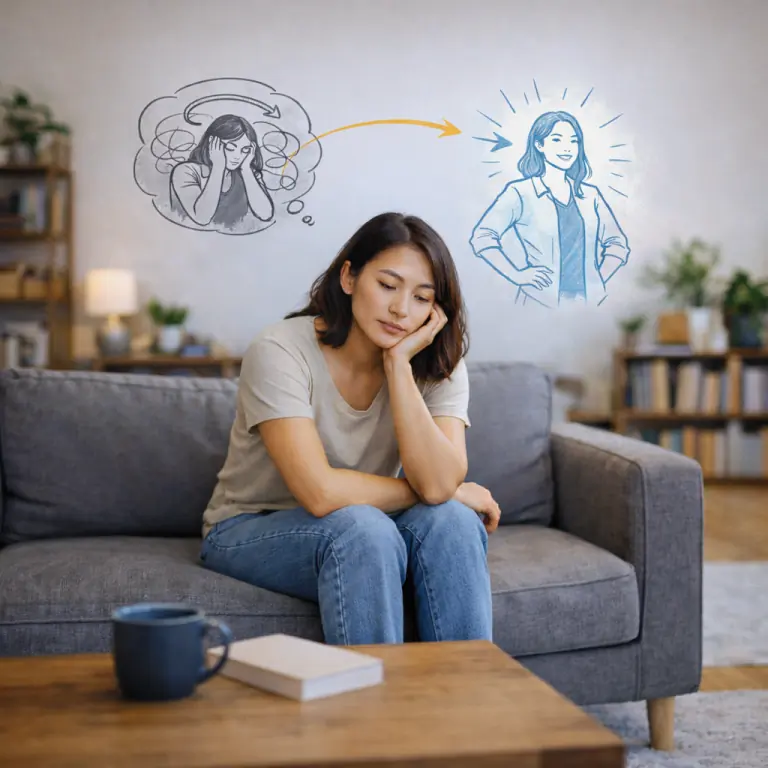
"Vang de lus bij de eerste herhaling, niet bij de vijftiende."
Doorbreek onproductieve denkpatronen
Het is twee uur 's nachts en je speelt het gesprek van op het werk opnieuw af. Alweer. Je zei iets onhandigs, de ander reageerde vreemd, en nu draai je de vijfde versie af van wat je in plaats daarvan had moeten zeggen. Elke herhaling maakt de herinnering erger. De schaamte wordt heviger. Je brein heeft een groef gevonden en blijft daarin hangen, om steeds hetzelfde spoor te draaien tot je uitgeput bent maar nog geen stap dichter bij slaap.
Deze lussen zijn niet willekeurig. Het zijn patronen die je zenuwstelsel heeft geleerd om automatisch af te spelen. Iets zet de reeks in gang en je brein voert het hele programma uit zonder toestemming te vragen. De gedachte tolt rond, je stemming zakt, je energie loopt weg, en twintig minuten later kom je boven en vraag je je af wat er net gebeurde. Je kunt je niet uit deze patronen wegdenken, want denken is precies wat ze draaiende houdt.
Patroononderbrekingen werken omdat ze de reeks doorbreken voordat die afgerond is. Je brein draait een programma, en programma's hebben continuïteit nodig om te kunnen worden uitgevoerd. Onderbreek de stroom en het patroon verliest momentum. Doe je dat consequent, dan wordt het patroon zwakker totdat het niet langer automatisch wordt geactiveerd.
De sleutel is om het vroeg te herkennen. Als je al een kwartier diep in de spiraal zit, wordt onderbreken moeilijker. Je moet de eerste lus opmerken, het moment waarop je aandacht blijft haken aan de gedachte en die opnieuw begint af te spelen. Die eerste haak is jouw ingrijpmoment.
Submodaliteiten zijn de manier waarop je brein ervaring codeert. Elke gedachte heeft eigenschappen. Plaats in de ruimte, helderheid, grootte, afstand, scherpte, volume, toon. Meestal merk je deze kwaliteiten niet op omdat ze op de achtergrond meelopen, maar ze bepalen hoeveel emotioneel gewicht de gedachte heeft. Verander de submodaliteiten en je verandert de impact.
Neem de gedachte die zich herhaalt. Merk op waar die verschijnt in je mentale ruimte. Recht voor je? Links van je? Dichtbij of ver weg? Verplaats haar nu bewust. Is ze dichtbij, duw haar dan verder weg. Is ze helder, maak haar dan donkerder. Is het een film, maak er dan een stilstaand beeld van. Is er een stem die de gedachte vertelt, geef die dan een belachelijke toon. Een Mickey Mouse-stem, slow motion, een monotone robot.
Dit gaat niet over positief denken. Je vervangt de gedachte niet door affirmaties en probeert jezelf niet te overtuigen dat ze niet waar is. Je verandert de voorstelling zodat ze minder emotionele lading heeft. Een gedachte die ver weg is, dof, en uitgesproken met een stripfiguurstem, roept niet dezelfde lichamelijke reactie op als een gedachte die dichtbij is, helder, en verteld wordt door je eigen angstige innerlijke verteller.
Het swish-patroon gaat nog een stap verder. In plaats van de onproductieve gedachte alleen te verzwakken, vervang je de reeks door iets nuttigers. Begin met het beeld dat de lus activeert, de gedachte die het allemaal op gang brengt. Zie het duidelijk voor je. Maak nu een tweede beeld van hoe je in plaats daarvan wilt reageren. Niet perfect, gewoon beter. Meer vindingrijk, bekwamer, rustiger.
Stel je het eerste beeld groot en helder voor je voor. Plaats in de benedenhoek het tweede beeld, klein en donker. Swish ze nu om. Het eerste beeld krimpt en wordt donkerder terwijl het wegschuift. Het tweede beeld wordt groter en helderder terwijl het naar voren komt. Doe dit snel. De hele swish duurt minder dan een seconde. Maak daarna je mentale scherm leeg en herhaal dit vijf keer.
Je brein leert de nieuwe reeks. In plaats van automatisch de oude lus af te spelen, gaat het richting het nieuwe beeld. Het patroon is niet gewist, maar je hebt een concurrerend patroon geïnstalleerd dat sneller en sterker is. Met herhaling wordt het nieuwe patroon de standaard.
Hier zijn drie noodonderbrekingen voor als je jezelf midden in een lus betrapt. Eerst: lichamelijke verstoring. Ga staan, schud je lichaam uit, spring, klap drie keer hard in je handen. Je gedachten zijn neurologische patronen en neurologische patronen hebben lichamelijke componenten. Verander je lichaamstoestand en het gedachtepatroon verliest zijn stabiliteit.
Ten tweede: zintuiglijke overweldiging. Dit werkt omdat je brein geen innerlijke lus kan vasthouden terwijl het intense prikkels van buiten verwerkt. Spat koud water in je gezicht. Bijt in iets zuurs. Leg ijs op je polsen. De zintuiglijke schok onderbreekt het patroon en geeft je een nulpunt.
Ten derde: patroonverwarring. Neem de gedachte die zich herhaalt en prutst er bewust mee. Speel haar achterstevoren af. Versnel haar tot ze absurd snel gaat. Voeg circusmuziek toe. Stel je voor dat de hele scène onder water plaatsvindt. Het punt is niet om je problemen belachelijk te maken, maar om het neurale pad te doorbreken door de variabelen te veranderen waarvan het patroon afhankelijk is.
Oefen deze onderbrekingen eerst op milde lussen. Wacht niet op de ergste spiraal van je leven om te testen of koud water werkt. Gebruik ze bij kleine ergernissen, lichte zorgen, de alledaagse lussen die niet verpletterend zijn maar toch onproductief. Bouw de vaardigheid op wanneer er weinig op het spel staat, zodat ze beschikbaar is wanneer er veel op het spel staat.
De meeste mensen denken dat onproductieve patronen vaste onderdelen van hun persoonlijkheid zijn. Je bent nu eenmaal een piekeraar, een angstig type, iemand die blijft hangen in dingen. Dat verhaal houdt het patroon op zijn plek. Dit zijn geen persoonlijkheidskenmerken. Het zijn aangeleerde reeksen die je kunt onderbreken, aanpassen en vervangen.
De lussen verliezen hun kracht wanneer je ze niet langer als waarheid behandelt, maar als programma's. Programma's kun je debuggen. Voer de onderbreking uit, verschuif de submodaliteiten, installeer het swish-patroon. Doe het vaak genoeg en je brein leert dat de oude lus niet de enige optie is. Het is zelfs niet de meest efficiënte.
- Onderwerpen:
- #Gedragsverandering